Wednesday, May 9, 2012

Converting XML Schema to Relax NG

Needed to convert W3 XML Schema for web.xml files to Relax NG so that I can edit those files in emacs with XML element expansion and syntax highlighting provided by nxml mode. I found a lot of references on the Internet for Sun's XSD to RNG converter. However, most links pointing to Sun website were broken. Finally, I found that RNG converter is a part of the Kohsuke Kawaguchi's MSV project. After installing rngconv.zip, I downloaded web-app_2_4.xsd, j2ee_1_4.xsd, jsp_2_0.xsd from Sun's XML Schemas for J2EE and converted the first one for use with nxml.

One little quirk was to add in the RNC schema a definition for xsi:schemaLocation attribute to the definition of element web-app

namespace xsi = "http://www.w3.org/2001/XMLSchema-instance"
element web-app {
attribute xsi:schemaLocation { "http://java.sun.com/xml/ns/j2ee http://java.sun.com/xml/ns/j2ee/web-app_2_4.xsd" },
...
2012 update: Since Oracle bought Sun, the MSV RNG Convertor is even harder to find. I found the download link at nightly rngconv.20060319.zip. Also, in j2ee_1_4.xsd, you will need to uncomment the following statement:
xsd:import namespace="http://www.w3.org/XML/1998/namespace" schemalocation="http://www.w3.org/2001/xml.xsd"
Download the result from Google Docs: web-app_2_4.rnc

Tuesday, May 1, 2012

Undo Google Chrome "never translate a page" setting

In Google Chrome Translate Bar, I accidentally configured the browser to never translate a foreign site I was browsing. I wanted to undo the setting, but apparently there is no UI to undo. Neither there is a UI to edit the list of sites blacklisted from translating. I had to find Google Chrome Preferences file, which in Linux is ~/.config/google-chrome/Default/Preferences. The Preferences file is apparently in JSON format. Somewhere near the bottom of the file, I found these two lines:

"translate_language_blacklist": [ "ru" ],
"translate_site_blacklist": [ "www.lemonde.fr" ],
The "translate_language_blacklist" apparently lists all languages you configured never to translate. The "translate_site_blacklist" lists all the sites you never wanted to be translated. Just delete the whole line or just the site you want to be removed from the list.

Friday, February 4, 2011

As a follow up to Remco's How to set up Tomcat logging to Syslog, I am including my own version of a class that enables Tomcat logging to Syslog. This class overrides the standard AccessLogValve and logs messages via Log4J API to category accesslog, level INFO.

To compile this class, you will need catalina.jar and servlet-api.jar in your CLASSPATH.

To configure Tomcat to use this class, edit your conf/server.xml and replace className in the access logging Valve with com.ofc.tomcat.Log4JAccessLogValve. Then, in lib/log4j.properties, configure appenders for category accesslog (property log4j.logger.accesslog)


package com.ofc.tomcat;

/**
* Redirects AccessLogValve logging to Log4J category "accesslog" level info
*
* @author Nicholas Sushkin
* @version $Revision: 1.2 $ $Date: 2011/02/04 18:45:36 $
*/
public class Log4JAccessLogValve extends org.apache.catalina.valves.AccessLogValve
{
/**
* The descriptive information about this implementation.
*/
protected static final String info1 =
"com.ofc.tomcat.Log4JAccessLogValve/1.0";

private static final org.apache.log4j.Logger log =
org.apache.log4j.LogManager.getLogger("accesslog");

@Override
public void log(String message)
{
log.info(message);
}

@Override
public String getInfo()
{
return info1;
}

@Override
protected void open()
{
}
}

Sunday, March 21, 2010

Troubleshooting tftp-proxy in OpenBSD pf

Finally figured out OpenBSD firewall configuration in which internal hosts can access TFTP servers on the internet. In OpenBSD pf firewall, you need to configure tftp-proxy. Google search returns a lot of complaints about tftp-proxy not working and not a single success story. I now believe there is a typo in the official manual.

The OpenBSD FAQ for TFTP proxy specifies the following redirect rule to redirect outgoing tftp connections to the internal tftp-proxy.

rdr pass log on $int_if proto udp from $int_if to port tftp -> 127.0.0.1 port 6969
However, according to "pfctl -g -s nat|grep tftp", my pf expands the rule above to the following.
rdr pass log on xl0 inet proto udp from 192.168.2.1 to any port = tftp -> 127.0.0.1 port 6969
It's clear that the expanded rule will will not redirect traffic coming from all of the internal hosts. The rule needs to be changed to
rdr pass log on $int_if proto udp from $int_net to any port tftp -> 127.0.0.1 port 6969
which expands to
rdr pass log on xl0 inet proto udp from 192.168.2.0/24 to any port = tftp -> 127.0.0.1 port 6969
The latter covers the whole internal network instead of just one host 192.168.2.1.

Thursday, February 25, 2010

Importing S/MIME certificate into Java

Although it is now possible to import a certificate in p12 format, into java, just any S/MIME certificate will not work to sign jars.

Thawte used to give out free S/MIME certificates and when imported into Java, those certificates could sign java code. I recently tried to import a Comodo S/MIME certificate into a Java keystore and sign a jar. While I managed to export my S/MIME certificate from Firefox in .p12 format and import .p12 keystore into a Java keystore, signing with this certificate generated a warning "The signer certificate's ExtendedKeyUsage extension doesn't allow code signing." Also, Web Start failed to validate the signed jar, generating an exception in com.sun.deploy.security.CertUtils in the following code

// Require either all of bits 5,6,7 are false or
// that at least bit 7 be true
if ((getNetscapeCertTypeBit(cert, NSCT_SSL_CA) != false ||
getNetscapeCertTypeBit(cert, NSCT_S_MIME_CA) != false ||
getNetscapeCertTypeBit(cert, NSCT_OBJECT_SIGNING_CA) != false) &&
getNetscapeCertTypeBit(cert, NSCT_OBJECT_SIGNING_CA) == false)
{
Trace.msgSecurityPrintln("trustdecider.check.basicconstraints.bitvalue");
return false;
}
To get my S/MIME certificate from Java, I used Firefox Certificate backup as p12, then the following command to find the alias of my certificate inside the .p12 keystore:
keytool -list -keystore comodo-nsushkin\@openfinance.com-exp20120930.p12 -storetype PKCS12
Once I found out the alias "nicholas sushkin's the usertrust network id #3", I imported my S/MIME private key and certificate from p12 file into my JKS keystore under alias "nsushkin" using the following command:
keytool -importkeystore -deststorepass changeit -destkeypass changeit -destkeystore java-certs.keystore -srckeystore comodo-nsushkin\@openfinance.com-exp20120930.p12 -srcstoretype PKCS12 -alias "nicholas sushkin's the usertrust network id #3" -destalias nsushkin

Saturday, November 14, 2009

Fixing broken sound in flash plugin in Slackware 13.0

I upgraded my laptop to Slackware 13.0. In general, hardware support has improved. All hardware was detected automatically by HAL and UDEV. That includes formerly problematic Synaptic touchpad, both monitors attached via DVI and VGA, and Logitech Quickcam. I only needed minor adjustments to get dual screen out of the mirroring mode.

One of the minor problems was that flash plugin in Mozilla wouldn't play sound. That was despite that my username being a member of the group "audio". It turned out that if you had more than one sound device, Flash would only output sound to the first configured device (alsa card #0). When I booted the laptop with webcam attached through USB, the snd-usb-audio module loaded before snd-hda-intel, resulting in the first configured audio device (webcam) not supporting any audio output.

The workaround would be to always boot with the webcam unplugged. However, a better solution is to hint the device loading system (udev) that the built-in intel sound device needs to be loaded first. Google found me a solution in a Slackware forum at linuxquestions.org. Add a file in /etc/modprobe.d containing the following instruction: "options snd slots=snd-hda-intel,snd-usb-audio". You can check the mapping of sound card slots to modules using "cat /proc/asound/modules"

References: Slackware, Where Alsa looks for default sound card, Synaptics Touchpad with HAL, Dual-screen with xrandr.

Thursday, November 12, 2009

Command line email with attachments

This is a perl script which can be used as a replacement for "mail" program, but supporting email attachments.


#!/usr/bin/perl -w

#****h* common/send_files
# NAME
# send_files - sends an email with multiple file attachments
# FUNCTION
# Uses sendmail to send an email with attachments. Takes message text
# from the standard input.
# PARAMETERS
# --from - From email address
# --to - To email address
# --subject - Email subject
# --file - Attach a file (use multiple times to attach multiple files)
#
# All the unprocessed options are treated as files to be attached
#
# EXAMPLE
# echo "Look here" | send_files --from from@example.com --to to@example.com \
# --subject "Files" --file /tmp/1.txt --file /tmp/2.txt
#
# echo "Specify files last" | send_files --from from@example.com --to to@example.com \
# --subject "Files" --file /tmp/*.txt
# HISTORY
# $Header: send_files.pl,v 1.6 2008/04/08 20:53:13 nsushkin Exp $
# SOURCE
#
use MIME::Lite;
use MIME::Types;
use Getopt::Long;

my ($opt_from, $opt_to, $opt_subject) = ("", "", "");
my @files = ();
my $VERSION = sprintf("%d.%03d", q$Revision: 1.6 $ =~ /(\d+)\.(\d+)/);

GetOptions("from=s" => \$opt_from,
"to=s" => \$opt_to,
"subject=s" => \$opt_subject,
"file=s" => \@files);

push @files, @ARGV;
$oldC = $/;
binmode STDIN; undef $/;
$message=<STDIN>;
$/ = $oldC;

$msg = MIME::Lite->new(
From => $opt_from,
To => $opt_to,
Subject => $opt_subject,
Type => 'TEXT',
Data => $message
);

$msg->replace(
'X-Mailer' => "send_files.pl $VERSION"
);

for $file (@files)
{
die "Not readable $file: $!" unless -r $file;
chomp (my $mimeTypeS=`file -bi "$file"`);
my MIME::Type $mimeType = MIME::Types->new->type($mimeTypeS);
chomp (my $fileName=`basename "$file"`);

$msg->attach(
Type => $mimeTypeS,
Path => $file,
Filename => $fileName,
Encoding => ($mimeType->mediaType eq 'text' ? 'quoted-printable' : 'base64')
);
}

$msg->send;
#***

Tuesday, March 17, 2009

set role plustrace

Just spent an hour trying to configure autotrace in Oracle 10.2.0.3.0. It turns out that in addition to granting plustrace role to a user and creating a PLAN table, you also need to enable the plustrace role in the user's session using "SET ROLE PLUSTRACE;"

Read comments at the bottom of Tom Kyte's autotrace topic.

Friday, February 27, 2009

What will save the Earth and Wall Street?


A couple of recent articles in Wired and O'Reilly claim that technology for transparency, specifically XBRL (Extensible Business Reporting Language), is going to be crucial in saving the climate and also Wall Street. Go learn XBRL now!

In The Wired article, Daniel Roth suggests that XBRL

"...should become the lingua franca of every investment bank, hedge fund, pension fund, insurance company, and endowment fund. ... It is impossible to track any one loan in a CDO [collateralized debt obligation]; when it is combined and divided with other loans, it loses its independent identity... But if those mortgages and loans carried XBRL tags, and everybody who touched them along the way was required to use those tags as well, anyone would have been able to track their circuitous route through the financial industry and judge each CDO based on its actual content."
Chicago Climate Exchange (CCX) is a market for trading offsets of carbon and other climate related emissions, implementing the "trade" component of a "cap and trade" climate control scheme. As far as I understand, currently, CCX takes semi-manual submissions of trades via its website. However, it turns out XBRL can be used to automate carbon credit accounting and trading.

Kurt Cagle writes
"...think of each participant [of smart power grid] as a node in a network. At any given point, the state of that node - how much energy they have available for transmission at that point in time, how much energy they currently need to fulfill demands upon them - can be represented as an XBRL accounting document."
For more information, read the following recent articles

Monday, February 9, 2009

Volkerding praises KDE4 again

Recently on Slackware ChangeLog, Volkerding wrote:

Tue Jan 27 14:33:35 CST 2009
KDE 4.2.0 is released -- congratulations to the KDE development team for such
an amazing job on this beautiful and highly user-friendly desktop environment!
Thanks also to Eric Hameleers, who did a ton of work getting KDE 4.2.0 ready
for Slackware. Once again (for now), these packages are compatible with
Slackware 12.2. Enjoy! :-)
Hopefully Slackware 13 will integrate KDE4 and I will be able to enjoy the new features and eye candy.

Friday, January 23, 2009

Alan Kay on modern programming languages

Most software today is very much like an Egyptian pyramid with millions of bricks piled on top of each other, with no structural integrity, but just done by brute force and thousands of slaves.
Read the rest in A Conversation with Alan Kay

Wednesday, October 1, 2008

Tuckey Rewrite

Note to self, Tomcat mailing list recommends a Url rewrite filter for a servlet container called Tuckey UrlRewrite. It functions similarly to the popular apache mod_rewrite. I speculate it may be helpful in a RESTful application to map requests to JSPs.

Wednesday, September 3, 2008

$5 multifactor authentication for OpenID


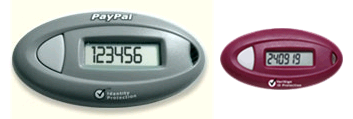
Paypal provides a $5 unique password security key which works with Verisign OpenID provider, according to blog "i like ellipses". Get it while the introduction price makes it a better deal than the $30 Verisign's own security key.

Availability of this key is a great news because using a unique password key makes your OpenID identity much more trustworthy.

Monday, July 21, 2008

Changing fan on Thinkpad T41


After four years in service, the fan of my Thinkpad T41 started to fail. The computer either wouldn't boot with "fan error" message at boot time if the fan doesn't start or the fan would whine causing video card to overheat, freezing X11. Time to change the fan.

I found the fan part number at IBM's website, it was "CPU Fan Long", FRU 13N5341. I searched online shops for the part, finding several listing the fan from anywhere from $30 to $80. At three different cheapest stores, I tried to order the fan and failed, each time the store canceling my order because the fan was out of stock. Then, I found the IBM parts store, 1-800-388-7080. At the IBM store, the fan was $58 and 1-2 day shipping via DHL was $15, an amazing deal. They just changed the part number to 91P9252. I ordered the fan on Friday. On Monday I received a new looking fan, nicely packaged, with thermal gel intact (covered with a removable film) and thermal grease pre-applied in the right place (gel above the video card heat sink and the grease above the CPU).

The hardest part was removing the old fan. I had to find just the right screwdriver (Philips #1 from my toolkit having Ph 0..3) and applying drops of WD-40 to the fan screws. Once the fan was out, putting new fan and closing the laptop was a piece of cake. The laptop booted just fine and noise disappeared. Let's hope the thermal gel and grease adhere correctly, but it looks like IBM still got the chops. Let's hope new Chinese owners (Lenovo) won't screw it up.

Friday, July 11, 2008

NoClassDefFoundError: oracle/gss/util/NLSLocale

When I upgraded my Oracle JDBC driver to 10.2.0.4, Oracle XSQL Utility started giving me the following exception when using "-encoding UTF-8"

Exception in thread "main" java.lang.NoClassDefFoundError: oracle/gss/util/NLSLocale
at oracle.xml.sql.XSULocale.getJavaCharset(XSULocale.java:122)
at OracleXML.To_XML(OracleXML.java:1092)
at OracleXML.ExecuteGetXML(OracleXML.java:917)
at OracleXML.main(OracleXML.java:185)

Ok, it turns out that in Oracle 10.2.0.4, some classes that used to be in
orai18n.jar got separated into their own jars, which are shipped with Oracle
XDK, not with Oracle JDBC drivers. For example, oracle.gss.util.NLSLocale is now in $XDKHOME/jlib/orai18n-mapping.jar.

Wednesday, June 11, 2008

LCD text in NetBeans

Finally figured out how to enable sub-pixel rendering (also known as LCD text) in NetBeans. Just add -J-Dawt.useSystemAAFontSettings=lcd to netbeans_default_options variable in your ~/.netbeans/6.1/etc/netbeans.conf

Tuesday, March 18, 2008

Bash Random Shuffle

Here is a bash function which returns a random permutation of the input lines of text.

#****f* shadegrowncode/randomShuffle
# NAME
# randomShuffle - prints random permutation of lines in standard input
# FUNCTION
# Prints all or the first N lines of a random permutation of the
# lines of standard input. The random permutation is obtained using
# Durstenfeld shuffle algorithm. Performance is O(N) in memory and
# CPU. Limit the input to 32768 lines or rewrite using a different
# random generator.
# SEE ALSO
# http://en.wikipedia.org/wiki/Knuth_shuffle
# PARAMETERS
# * 1 - (optional) return only the first N of the random lines of input
# SOURCE
function randomShuffle
{
typeset -a elements
typeset length=0
while read line
do
elements[$length]=$line
length=$(($length + 1))
done
typeset firstN=${1:-$length}
if [ $firstN -gt $length ]
then
firstN=$length
fi
for ((i=0; $i < $firstN; i++))
do
randPos=$(($RANDOM % ($length - $i) ))
printf "%s\n" "${elements[$randPos]}"
elements[$randPos]=${elements[$length - $i - 1]}
done
}
#***

Usage examples:
Print three random users from the password file:
$ cut -d: -f1 /etc/passwd | randomShuffle 3
sync
sysadmin
vcsa

Print a random permutation of digits:
$ echo $(printf "%s\n" 0 1 2 3 4 5 6 7 8 9 | randomShuffle)
4 1 0 6 8 7 2 5 3 9

Friday, February 15, 2008

Volkerding says KDE4 better than MacOS


Patrick Volkerding (Slackware Project Lead) gives glowing thumbs up to KDE4 and slates it for inclusion into Slackware 14. Slackware is currently at version 12 and releases once a year. At this rate, KDE4 will be in Slackware in 2009. Among other things, Patrick says the following.

The look of the new [KDE] desktop is stunning, and the use of SVG and hardware acceleration gives (IMHO) even something like MacOS a run for its money in terms of appearance and user-friendliness. We look forward with great anticipation to merging KDE4 when it is mature enough (and it's getting there fast), and then watching it just get better and better.
The full quote can be found in Slackware ChangeLog.

Thursday, January 10, 2008

Reason to switch to Linux #11


Windows taskbar clock cannot display seconds since Windows 95.
Why? Because when installed on a 4 Mb machine, Windows 95 was too slow to display seconds. This and other lame excuses are blogged at MSDN. There is a whole shareware industry around Windows to fix this problem. If you want to measure time, use online javascript stop watch or US atomic clock at time.gov

Tuesday, December 11, 2007

Java sighting on a cup of milk


Looking at this cup of soy milk in Taipei, I thought at first that somebody stole Java logo. Then, looking closer, I realized it's a genuine ad for Java training. Something you won't see on a milk container in the US...